
In a video, Chandrachud and his wife Kalpana Das were seen welcoming Modi at their house.

A controversy had arisen over his stay at the official residence of CJI at 5, Krishna Menon Marg, New Delhi, beyond permissible time.
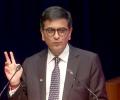
"The boy came from a marginalised background, could not pay the admission fees of Rs 17,500. He would have lost his admission had we not granted relief then. This is what has sustained me as a judge all these years," the CJI said.

In his address, CJI Chandrachud recounted his journey, from sitting in the last row of the court as a young law student to his time on the revered corridors of the top court.

India's anti-corruption ombudsman, the Lokpal, has dismissed a complaint alleging corruption against former Chief Justice of India (CJI) DY Chandrachud, citing a lack of jurisdiction. The complaint, filed in October 2024, alleged abuse of office, corruption, and favoritism by Chandrachud while he was CJI. The Lokpal, in its order, concluded that sitting judges of the Supreme Court, including the CJI, are not subject to its jurisdiction under the Lokpal and Lokayuktas Act. The Lokpal stated that the Supreme Court was established by the Constitution of India, not an Act of Parliament, making it outside the scope of its jurisdiction.

Asserting that he prays regularly, the CJI said, "Believe me, if you have faith, God will always find a way."

He would have a tenure of two years and is due to retire on November 10, 2024.

While that created a stir so did the decision on his penultimate day at work with the Supreme Court rechristening its summer vacation "partial court working days", an issue that has led to criticism that the apex court judges enjoyed long breaks.

He also said "forward-looking" policies and judgements were needed to ensure that the benefits of social welfare measures actually reach the citizens.

The Supreme Court on Wednesday dismissed a plea seeking to restrain its senior-most judge, Justice D Y Chandrachud, from taking oath as the Chief Justice of India on November 9 by terming the entire petition "misconceived".

The apex court had decided to hear the pleas related to the IOA and the AIFF together.

According to the CJI, once someone has a sense of faith in his/her intentions and abilities, it is easier not to obsess over outcomes but to value the process and the journey towards those outcomes.

Chandrachud said it should be ensured that courts provide safe and accommodating environment for all members of the society.
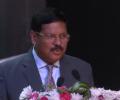
"The moment we let technology take the driver's seat in the legal system, we begin to erode the public's faith in us and with it, the foundations of the rule of law," CJI Gavai added.

Several opposition leaders and some lawyers of the Supreme Court reacted sharply to Modi attending the puja at the CJI's residence.
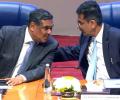
Chief Justice of India-designate Sanjiv Khanna on Friday lauded CJI D Y Chandrachud for his "monumental" contribution, saying he worked on a mission to improve the apex court and pursued his goal of making it "a sanctuary of inclusivity", which was accessible to all.

Chief Justice of India Sanjiv Khanna has recused himself from hearing pleas related to the alleged illegal felling of hundreds of trees in the Delhi Ridge area. The decision comes after a previous bench, led by former CJI D Y Chandrachud, sought a personal affidavit from Delhi Lieutenant Governor V K Saxena in the case, which also sought contempt proceedings against certain DDA officials. CJI Khanna stated that his prior involvement with the Delhi LG while serving as the NALSA chairman would make it inappropriate for him to hear the plea. The bench has ordered the listing of the pleas before a different bench starting November 27.

Chief Justice of India D Y Chandrachud on Tuesday said the State has an obligation to recognise unions entered into by queer couples and grant them benefit under the law.

Following is the chronology of events in the case related to validity of the electoral bonds scheme, a mode of funding to political parties, in which a five-judge Constitution bench of the Supreme Court on Thursday delivered a landmark verdict annulling it.

An exasperated Justice Chandrachud asserted he will not allow any lawyer to "dictate" the procedure of the court.
"It is very easy to fling allegations and letters," an anguished Chief Justice of India D Y Chandrachud said on Thursday while clarifying that the bail plea of Aam Aadmi Party leader Satyendar Kumar Jain in a money laundering case was listed before a bench headed by Justice Bela M Trivedi as Justice A S Bopanna was unavailable due to illness.
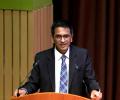
Justice Chandrachud will serve as the CJI for two years till November 10, 2024.
Besides the present CJI Chandrachud, former CJIs Ranjan Gogoi and SA Bobde and former judges Ashok Bhushan and S Abdul Nazeer were part of the bench which had delivered the historic verdict on November 9, 2019.

Amid a heated debate over the three new criminal laws, Chief Justice of India DY Chandrachud on Tuesday refused to comment on them, saying the issues arising from these statutes were pending before the Supreme Court.

President Droupadi Murmu administered him the oath at a brief ceremony held at the Rashtrapati Bhavan.
He further opined that though as public functionaries, courts were vested with the responsibility to give effect to equity, these judicial bodies were not directly in charge of the manner in which resources were to be distributed.
"What the legislature cannot do is to say that we think the judgment is wrong and therefore we overrule the judgment. The judgment of a court cannot be directly overruled by the legislature," the CJI said.
The Supreme Court on Monday took strong note of former Chief Justice of India Ranjan Gogoi being made a party to a PIL and seeking of an in-house inquiry against him for dismissing a plea earlier related to a service dispute.

Chief Justice of India (CJI) D Y Chandrachud's first 100 days in office saw the Supreme Court take a giant leap towards reforms, especially making courts more technology-friendly, and ensuring relatively fast judicial appointments including those of eight judges to the apex court.

The CJI said there is an urgent need to emerge from the adjournment culture to a culture of professionalism.

Writing a 247-page separate judgement, Chief Justice of India DY Chandrachud struck down Regulation 5(3) of the CARA, saying it is violative of the rights of the queer community and that the CARA has exceeded its authority in barring unmarried couples from adopting children.

CJI Chandrachud said courts across the country are likely to become paperless soon.

The Supreme Court is hearing petitions related to discrimination against women at religious places, including the Sabarimala temple. A nine-judge bench is examining the scope of religious freedom and the exclusion of women based on age and menstrual status.

Justice Chandrachud also dealt with questions about criticism by eminent lawyers on the allocation of cases to particular judges and 'bench hunting', and said the allocation of cases is not "lawyer-driven" and vowed to maintain the credibility of the institution of the Supreme Court.

He will take oath on November 11, a day after incumbent Justice DY Chandrachud demits office on attaining the age of 65.
"We live lives which are relatively isolated from the political arm of the government -- but obviously judges have to be conversant with the impact of their decisions on the polity at large. That's not political pressure but an understanding by the court of the likely impact of a decision," CJI Chandrachud said in his address at the Oxford Union.

He said he was wondering where our institutions are going wrong, that students are forced to take their life.
Newly sworn-in Chief Justice of India DY Chandrachud on Monday asked Supreme Court and high court judges to shun "colonial mindset" and the "culture of subordination" while dealing with district court judges, saying the country needs to move towards a "more modern and equal judiciary".
"The doctrinal error in the Krishna Iyer approach was, postulating a rigid economic theory, which advocates for greater State control over private resources, as the exclusive basis for constitutional governance," the CJI wrote in the 193-page judgment.

Modi also said that Lord Ganesh was "put behind bars" in Karnataka by these people.
